Frozen in Midair
by Sharman Ober-Reynolds
I took my husband to see his neurologist on December 5th. The power was out at the long block of medical office buildings, and the cold pushed through me while I knocked on the automated doors. Perhaps I should have taken this as a sign of things to come because the rest of the visit also had its share of unwelcome surprises. Doctor’s appointments are never fun, but we hoped for common-sense recommendations, maybe a medication adjustment, or just some comfort as we managed Parkinson’s Disease (PD). Boy, were we wrong. The only thing we learned is that there’s more than one way to be left out in the cold.
Eventually, a tall man in scrubs noticed us through the glass, smiled, and pushed open the door to let us in. A medical assistant checked my husband into a dim, chilly exam room and took his vital signs in several positions. He scribbled the results on a scrap of paper and handed them to the medical fellow. We’d seen this doctor before and liked him. He is about five feet five inches tall, with curly reddish hair, a practical, agile mind, and is as cheerful as a Hobbit. I was updating him when Steven froze getting off the table. I grabbed the back of his pants, as I do at home, and guided him into his wheelchair. I know all about freezing of gait in Parkinson’s. Its acronym, FOG, points to its consequences: confusion, tripping, and falling. Still, I wasn’t ready for freezing in bed, on the couch, or in midair.
The medical fellow watched us. Once Steven was settled, he said, “Unfortunately, there aren’t good treatments for freezing. Movement control in the brain is complicated.” We chatted while he performed a brief neurological exam, checking for tremor, strength, and stiffness. He moved Steven’s arms and wrists, asked him to tap his feet, then had him beat fingers like castanets. Steven can’t play violin or piano anymore, but he still has rhythm. The doctor said, “The trick in Parkinson’s is keeping the body moving.”
Steven is a conscientious patient. He said, “Sharman does that. She tells me to move my foot close to hers, step sideways, and punch the air.” Sometimes I exaggerate these movement at the same time. This makes Steven laugh, which distracts him, and he takes another step. Navigating our shower is like parallel parking, with many stops, twists, and turns.
“We also sing, count, and use a metronome,” I added. “And Steven has a walker with a laser.” It projects a red beam onto the floor to prompt him to take another step. Satisfied we knew all the tactics used to keep a person with Parkinson’s moving, the medical fellow left to confer with Steven’s regular neurologist.
A poster of a brain hangs on the wall, with a green midbrain balanced on the brainstem. When the neurons in this bridge-like structure die, its function as a relay station to the rest of the brain is disrupted. That’s when a person develops Parkinson’s Disease. Understanding the cause of PD, however, doesn’t mean that anyone, even those at the Michael J. Fox Foundation, knows how to prevent, reverse, or even manage its relentless progression, although I appreciate their efforts. I was dwelling unhappily on this when the neurologist swung open the door with the medical fellow in tow.
We’ve been seeing his neurologist for two years. She’s Latina, probably in her forties, about five feet one, with luminous blue-green eyes. She closed the door, set her small, zippered bag with its reflex hammers, tuning forks, and penlights on the counter, then shook our hands with professional briskness.
Maybe she was behind schedule and anticipating all the extra work she’d have because she didn’t have access to her patients’ electronic records. Or maybe because the medical fellow had already brought her up to date, she dispensed with her usual niceties. She led with, “I understand you’re not walking anymore, Mr. Reynolds.” Her voice was almost accusatory, which surprised us. Then she asked, “How do you feel about that?” I was trying to understand her question, not the words, but why she asked it. How does anyone feel about not walking anymore?
Steven had a reasonable answer. “It’s better than falling all the time.” Over the last few months, he’d been using his walker with the built-in metronome and laser, and I’d hear a thump and come running. “I lost my balance,” he’d say, quiet and contrite and ashamed as though it were a thing he had misplaced and maybe I could find where he’d left it. Sometimes after crashing to the floor, he’d say, “I’ve bashed my head again,” perplexed that his body was no longer under his control. Although the parts of him seemed to pull in different directions, and he’s much bigger than me, I’d pull him up, and he’d climb into the wheelchair I’d positioned close. Both of us wanted to pretend this wasn’t happening, but we couldn’t. He had the bruises to prove it. Steven was relieved when we started using a wheelchair, and I was resigned.
Disregarding what Steven said, as if his opinion on the subject didn’t matter, the neurologist continued, “There are five stages of Parkinson’s. Stages one and two have mild symptoms affecting first one and then both sides of the body. Stage three means balance problems. In stage four, patients use a walker. Stage five is the most advanced. Patients are wheelchair bound and require around-the-clock care. That’s where you are now.” Her words were hard, cold, and beyond negotiation.
We know where we are now. Still, naming something is powerful. It is both a summoning and a summing up. And it made us unwilling eyewitnesses to ourselves.
For a while her words reverberated in the room. Then she continued with, “How is your quality of life?”
Steven said, “Pretty good.” PD has stiffened his facial muscles, so he can appear indifferent even when feeling strong emotions. I can only imagine what my face conveyed. What he meant to say, I think, is that we’re doing the best we can. We now have three wheelchairs: one in the house, one in the back of our Ruby Flare RAV 4, and a motorized one in the garage, which is scary to use since Steven’s Parkinson’s also impacts his ability to use a joystick. And while there are days when his body aches from doing nothing, even pain and fatigue must take a rest. So, we also have season tickets to the theater, dessert every night, good friends, weekly family Zoom calls, and a new granddaughter. Our bi-coastal sons visit when they can. When we fly, we’re first on the plane.
Unsatisfied with ‘pretty good,’ the neurologist pressed further. “What do you do all day?” For a moment, Steven blinked, flummoxed by these questions that weren’t really questions. Even the medical fellow’s smile vanished, and he rocked back and forth on the balls of his feet.
“Well, I watch TV,” Steven said, almost apologetically. To elaborate, we like Rick Steves, National Geographic, Ken Burns, classical music, and the Benedict Cumberbatch version of Sherlock Holmes. Last year, we watched every episode of Perry Mason, and I was reminded that at some time in our lives, we’ll all need an advocate, especially when it feels like all our luck has gone to someone else. Steven and I also watch the news, usually in satirical form, because who can tolerate the real thing? It raises his blood pressure, but that’s not always a bad thing. Before he started taking medication to treat the orthostatic hypotension that comes with Parkinson’s, his blood pressure dropped like a rock when he stood—no wonder he was falling.
Steven added with more confidence, “And I like to read.” For five decades, he studied, taught, and wrote Philosophy. Now he prefers to read Bloom County, Pogo, and Calvin and Hobbes.
“I hope you’re still exercising.” The doctor waved her arms. With her sleek dark hair swept back in a ponytail, she resembled a plump quail bobbing its topknot and flapping its wings.
Steven added a bit defensively, “I move around quite a bit.” He does, but when his medications haven’t kicked in, he’ll look down at his feet because they aren’t going anywhere, and say, “It should be the easiest thing in the world to walk through that door, but I can’t.” When he’s all angles, stiff, and inflexible as an old oak, I encourage him to rock back and forth. Then I demonstrate how a Middle-earth Ent comes to life.
We’re not slackers, so I said, “We go to the wellness center three times a week. And I put together a notebook with wheelchair exercises.” Since Steven’s PD diagnosis in 2012, we’ve attended tai chi, yoga, boxing classes, and unending physical therapy sessions. We’ve stayed active despite, no, because of his diagnosis.
“Well, that’s good. Because if you don’t, you’ll get deconditioned, and it will be harder to transfer. You could even get bed sores.” Steven shifted in his chair and narrowed his eyes, as if he was trying to see what she was saying.
Out of nowhere, she asked, “Are you hallucinating?” It felt like this whole visit was a waking nightmare. Steven had heard this question before and was prepared. “No.” Still, almost half of the people with advanced PD see, hear, and feel things that aren’t there, and experience delusions. Some of the drugs used to treat the brain’s diminishing supply of dopamine can trigger psychosis as well. Steven hasn’t had hallucinations, but he does have vivid dreams, sometimes flailing his arms and yelling out in his sleep. But then he always has. When we were first married, he once sat up in bed, yelled bloody murder, and took a swing at me after dreaming I was the Night Stalker who terrorized Los Angeles in 1985.
In the gloomy exam room, the neurologist’s luminous blue-green eyes were now gray stones, opaque and unyielding. She asked, “Are you having trouble swallowing?” reminding us how much worse things were going to get.
I could tell that Steven wasn’t going to admit to any other challenges from his PD. He’s not one to complain, and clearly she wouldn’t be able to help him if he did. Besides, she seemed to have forgotten that at an earlier visit, he’d already discussed the trouble he was beginning to have with swallowing. This time he said, “No. I don’t have trouble swallowing.” In reality, he struggles with sandwiches. I cut his grapes in half, and he pours “special sauce” on everything else. When trying to get down the fifteen pills and capsules he takes daily, I make sure he has plenty of water, sometimes bury them in a spoonful of yogurt, and cut larger tablets in half. There are times he sputters and coughs like a drowning man, which is terrifying. When I come running, he’ll look up and say, “Sorry, dear. I’m okay.”
I’ve started adding “Simply Thick” to everything he drinks. By slowing down swallowing, he has more time to close his airway. Color-coded instructions on the side of the pump bottle read: one squirt for a bit of thickening, two for nectar consistency, three to make whatever he’s drinking as thick as honey. If I pump the bottle four times, Steven would need to use a spoon to drink his Ensure. He eats less, partly because it’s hard work, and has lost sixty pounds since he was diagnosed. I buy Costco-size bags of mini-Hershey bars and tootsie rolls and hand out treats all day long to distract my husband from the dirty trick fate has played on him.
Without examining him, the neurologist said, “I’ve done the best I can to keep you walking. Now I’ll do whatever I can to keep you out of the hospital.” Her focus was sharp and narrow, concentrating on the one thing she saw straight ahead. She continued, “I’m not making any changes in your medications or deep brain stimulation programming.” Steven had two electrodes implanted in his brain eighteen months ago. They deliver electrical pulses intended to interrupt the abnormal circuits that contribute to his tremor, stiffness, and slowness. Apparently, an electrical current can open a door and also help someone make the necessary neural connections to walk through it.
Abruptly, the building’s power was restored, returning us to a world of light, heat, and functioning computers. Taking that as a cue, the neurologist gathered her medical equipment. We usually see her every three months. This time she turned to us and said, “Make an appointment in four … no, make that six months.” She shook our hands again. It was the second time she’d touched Steven during the visit. She is a scientist and not one for “the laying on of hands.” Then she paused. Maybe she’d finally heard herself and regretted her tone, or, in the suddenly illuminated room, noticed our glum faces, because her voice softened and she said, “You can always call if you need something sooner.” She said goodbye and swept out of the room, leaving us in the aftershock of her professional judgment. The medical fellow smiled apologetically and followed in her wake.
*
When I recounted what happened to my friend, she said, “She’s kicking your husband to the curb.” That’s not a phrase you hear a lot these days, but she was right. Although, since we were talking about a physician, a more appropriate phrase would have been, “She’s washing her hands of you.” I’d hoped a neurologist specializing in movement disorders, which requires an additional eight to ten years of training after medical school, would be better at helping her patients on this unwelcome journey. After all, she chose this life; we didn’t. Steven says that I was being pretty tough on her, which, of course, I was. But then, he’s always been more forgiving than I am. He has the kind of heart that expands more than it contracts.
Human illness is vast and not easily treated. It must be difficult for physicians caring for those with PD to watch their patients’ abilities, strength, and independence slip away like a kite losing altitude. We’ve come to a time when nature is reclaiming its dominion over science and there are no more pharmaceuticals, procedures, or promises in her medical bag. No doubt she’s heard many versions of what it’s like living with Stage Five PD. Still, it was important she listen once more, nod, and say, “I know,” and “I’m sorry,” and “I’m here to help,” and let that be a comfort between us for a time.
I’ve read books about PD, watched videos, attended conferences, and I know what to expect. But there is a difference between understanding something and being understanding. On challenging days when I’m tired and afraid, and confronted with a world as it is and not as I wish it could be, like Steven’s neurologist, I can say decidedly unhelpful things. Grief has to find a voice, a home, a place to settle, or its dark wings overwhelm me.
A few miles behind our house, the Wasatch Mountains run like a spine through the Salt Lake Valley. They are rock-solid. Sometimes I imagine pushing my back against them when I need a bit more support, which is almost daily. There are five stages of PD and there are five front steps at our old Tudor house. Steven could navigate them on a Monday, but not on a Tuesday, so I’ve rented a twenty-eight-foot metal ramp which extends down our porch stairs, across our front yard almost to the sidewalk, where it flattens, makes two right turns like a switchback, and exits into our narrow driveway. I’ve taped pool noodles and reflective tape around the railings of this behemoth so I don’t scratch my SUV when I back up.
Anxiety makes everything more difficult for Steven, so whenever we go anywhere, I tell him, “There’s no rush. We have all the time in the world.” In some ways, that’s true. Our lives are unfettered and unscheduled. We plan our modest adventures as we please. Still, while our days may be long, we don’t have all the time in the world. No one can stop what’s coming our way. So, our hours are filled with moments of grace as well as sadness, courage as well as despair. Sometimes there is laughter, because, like yours, our life is a comedy with tragic bits. And I remind myself that each of us is given chances and days that won’t come back, even the difficult ones.
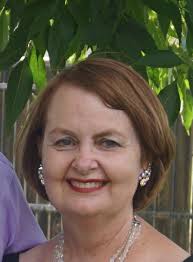
Sharman Ober-Reynolds was born in Los Angeles and completed an MFA at Arizona State University. She worked as a FNP in autism research and is primary author of The FRIEND Program for Creating Supportive Peer Networks for Students with Social Challenges, including Autism. Sharman received the League of Utah Writer’s Olive Woolley Bert and Silver Typewriter Awards. She was a short list winner in the Essays category of the 9th Annual Adelaide Literary Magazine Award Contest. Her creative non-fiction has appeared in bioStories, Adelaide Literary Magazine, and Storyhouse Weekly Reader. Sharman now lives and writes in an old house in Salt Lake City with her family and Cadoodle.